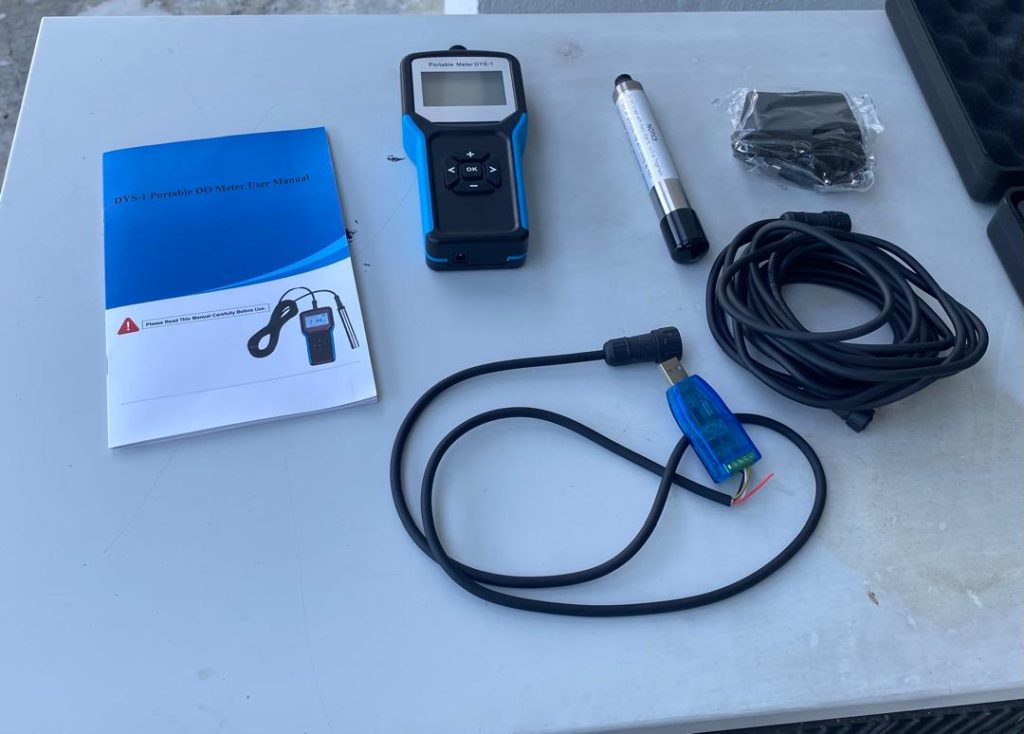
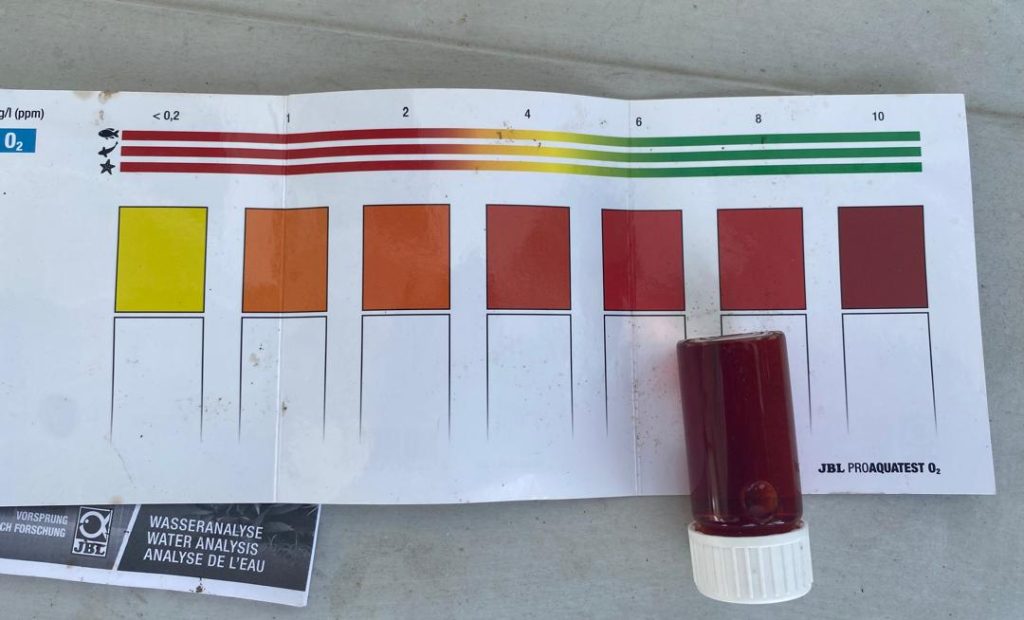
To improve the accuracy of dissolved oxygen (DO) readings in pond water, a new electronic DO meter was introduced. This device allows direct and real-time measurement by simply immersing the probe into the water. Unlike the previous manual method that involved collecting water samples in glass tubes and analyzing color changes, the new device provides immediate readings in mg/L (ppm), oxygen saturation percentage, and also includes a built-in temperature sensor.
Before each use, the device was calibrated manually to suit the water conditions of the specific pond. This ensures that the readings are as accurate as possible, taking into account variations in environmental factors such as temperature.
After calibration, the probe was inserted into the pond water. The electronic meter showed DO values ranging from 6.8 to 7.5 mg/L, depending on the location and time of measurement. These results were compared with the previous method, which showed a color indication corresponding to around 6 to 7 mg/L. While the manual method provides a general idea of DO levels, the electronic device offers a more precise and consistent measurement with better sensitivity to small changes.
Equipment and Methods
1. New Method: Electronic Dissolved Oxygen Meter
The new device is an electronic DO meter equipped with:
A probe sensor for direct water measurement
A temperature sensor
Real time DO value display in mg/L (ppm) and % oxygen saturation
A manual calibration function to adjust readings based on environmental suitability
Usage Procedure:
The probe was immersed directly into the pond water.
The device displayed real-time values of DO, oxygen percentage, and water temperature.
Calibration was performed before testing to ensure accurate readings.
2. Previous Method: Manual Colorimetric Test Kit
Involved taking a 5ml water sample in a glass tube.
A chemical reagent was added to the sample.
Colour change was observed and compared with a standard color chart.
Estimated DO levels were interpreted visually, typically in mg/L.
Observations
The electronic DO meter provided more precise and consistent results, including decimal values. The manual method gave a general estimation, which is acceptable but lacks precision, especially for research or monitoring where accuracy is critical.
The electronic device also displayed real-time temperature, aiding better interpretation of oxygen solubility.
Calibration of the device was straightforward, allowing adjustment based on local environmental needs or pond-specific settings.
Conclusion
The implementation of the electronic DO meter significantly improved the accuracy and reliability of dissolved oxygen measurements. The ability to obtain real-time data, temperature influence, and oxygen saturation percentage makes it a superior choice for aquaculture monitoring.
While the manual method can still serve as a basic or backup testing option, it is recommended to adopt the electronic DO meter as the primary tool for future water quality assessments.